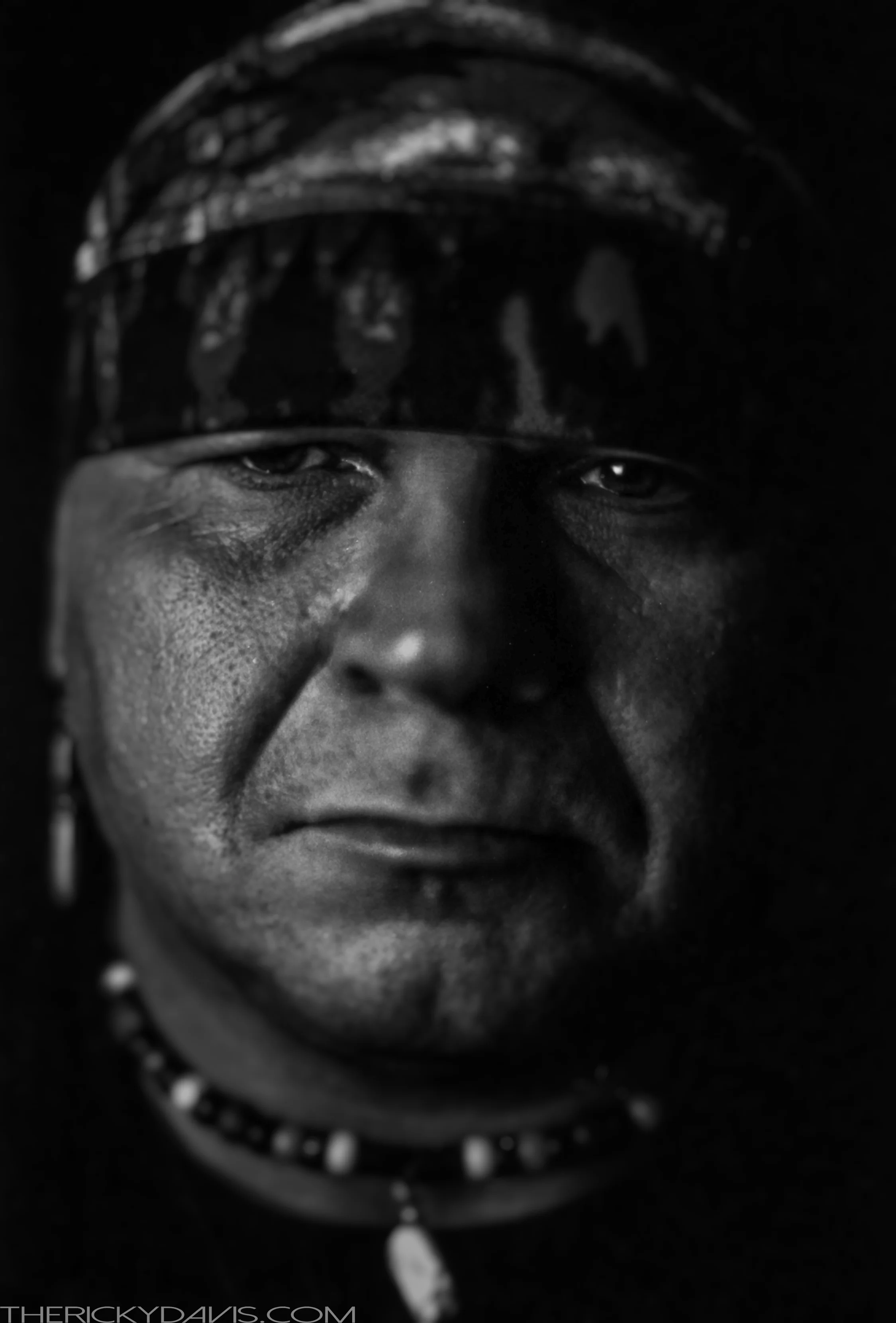
Native American Portraits - The Series - Interview with Wes Collins
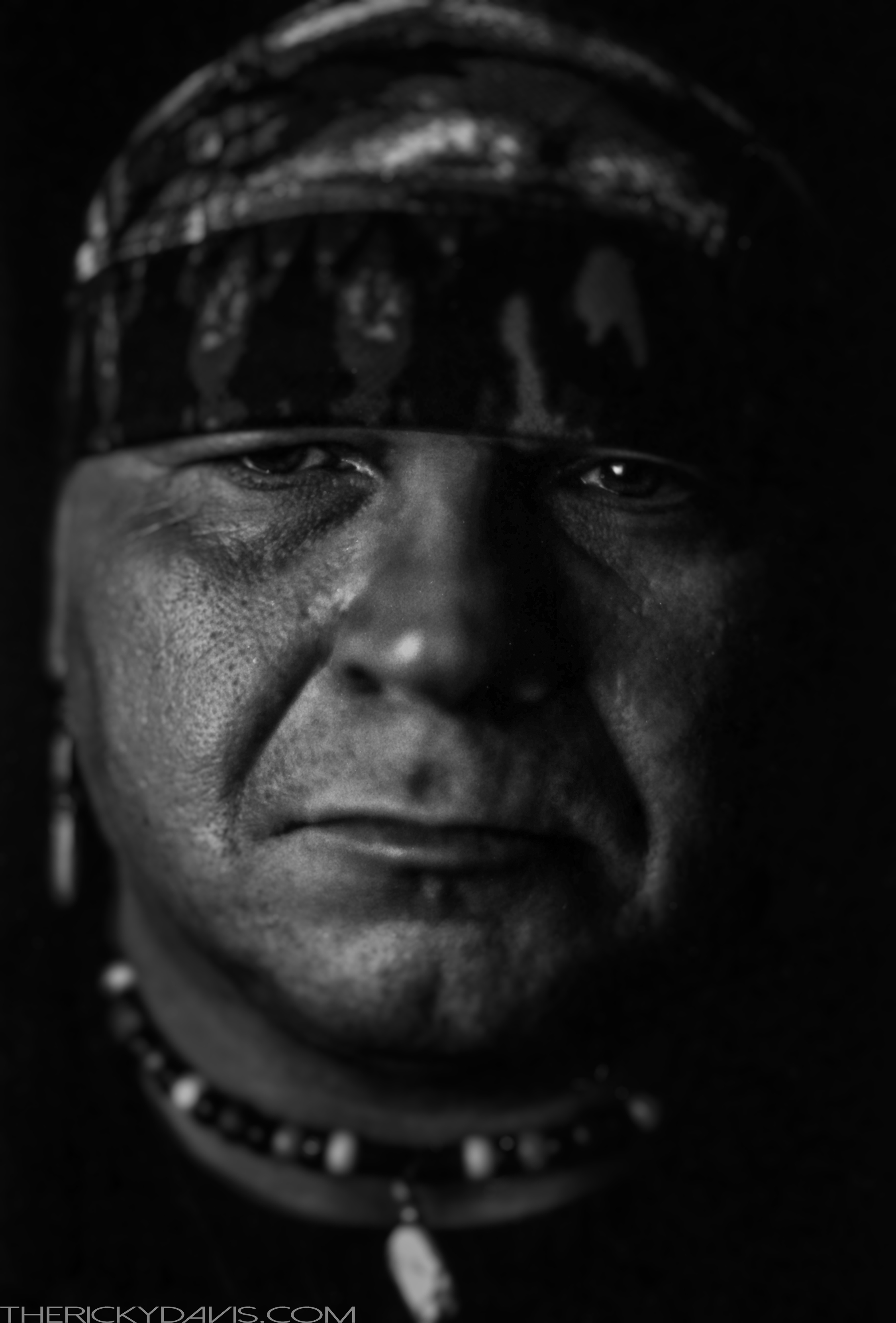
Native American Portraits - The Series - Wes Collins - Photographer - Ricky Davis
Native American Portraits - The Series
Intro
This is the first post in a brand new series that I'm working on. Before I share with you my interview with Wes, I wanted to share a little about the inspiration behind this series. Native American history has been an extremely important part of my life since I was a little kid. Before I even started reading, the books I picked out at the library to be read to me were American Indian history. When I first started learning to read, that's all I checked out. Fast forward to 2009 and my opportunity to do photography. Ever since I began photographing, I always knew at some point I wanted to be able to photograph Native Americans, much like Edward Curtis. I had no idea how I would be able to achieve it, but I wanted to photograph and share their stories. Much about what we have been "taught" to believe about Indians has been pop culture like old John Wayne movies, or just out and out lies and myths to discredit their culture. To me personally, my mission is to share with you some amazing people, and share their stories and thoughts of what makes them who they are and hopefully show you that we are all human beings. It's time to come together.
Ricky

Native American Portraits - The Series - Wes Collins - Photographer - Ricky Davis
Interview with Wes Collins
I met Wes because I recently attended a Pow Wow at Red Clay State Park. I went to the Pow Wow because I had missed it the last few years and I knew I wanted to get back. Since I attended my first Pow Wow back around 2005/2006, they have always been a really special thing to me when I've gotten to go. When I first started taking photos, I took some at a Pow Wow and honestly, they sucked. It was being laid heavy on my heart that I needed to reach out about my desire to do a portrait series, that it was time. I went to the Pow Wow and took some photos on film of the dancers in the Circle. Outside of the Circle, I had hoped to talk to some people about maybe letting me take a portrait, but everyone was always talking to someone and I didn't want to interrupt. After I shared some of the photos from the Circle, I was honored to hear from some of the dancers that I had photographed. I've been honored to get to know Wes a little bit, and I hope you enjoy his interview and that it opens some eyes.

Native American Portraits - The Series - Wes Collins - Photographer - Ricky Davis
Ricky - What kind of experiences did you have growing up in the South as a Native American?
Wes - I was raised in the rural area of the county with my grandparents, we didn’t have much and a lot of what we had was grown or made by my grandparents. My grandfather always made sure I knew how to hunt and live off the land as much as possible. He didn’t boast his native heritage and wouldn’t mention much about it, I only knew it as country living. While other kids in my school were going on vacations and spending summers in other states or areas, I spent my summers in the woods hunting. As I got older I really started noticing a difference. The other kids would tell the teacher what they had eaten for breakfast and when I mentioned that I had eaten squirrel dumplings that morning, I was taunted and made fun of. I remember one day I wore a bird skull necklace to school that I had made over the weekend. I had found the skull while hunting in the woods. I took it home where I bleached and cleaned it and I felt I was honoring the bird by wearing it. I was very proud to display it around my neck but still kept it under my shirt as not to upset some of the kids. When my teacher saw it, she got very upset and tried to claim that I was practicing witchcraft, I was very upset and embarrassed to say the least. She tried to have me suspended so my mother had to come up and talk to them. Where I was raised our families homes were all in one area, so at an early age I would go through the woods, with hunting rifle in hand, visiting all my relatives. This is how I spent my days. People would talk and act like I wasn’t being taken care of but it is basically like the adage “it takes a village to raise a child” all of my family took care of us. I may have been poor, but I never felt that way. Money had no value to us. Being close to nature and close to the Creator was of the utmost importance. I was not raised to be well educated, most families put an emphasis on school and I was raised differently. We were raised to stay close to nature and be more spiritual in life. We are an oral society so reading and writing isn’t our priority. My wife, Lisa, is even helping me to get across and interpret what I want to say. I do however encourage my children to continue their education but also try to develop their spiritual side so that my spirit will carry on through them, even though they are multi-cultural.
Ricky - What have been some of the misconceptions of Native Americans that you have experienced?
Wes - There are many misconceptions about Native Americans. Some people believe that we live off the government or receive benefits or special privileges . Some believe we are alcoholics or are lazy. Some believe that we are less than or inferior to other races. I believe in part because of us staying close to nature and not trying to be more educated or caring about money as others do. But this is not always the case either, we are all humans and we all are different in how we choose to live. We celebrate our culture but are not limited by it. Some of us choose to study and stay close to our heritage. Others choose to explore beyond that and branch out in different areas. I believe that we are very misunderstood in our beliefs and our spirituality just like any other culture.
Ricky - What are some of the difficulties of being Native in America?
Wes - Seeing people hurt because of misconceptions of our culture or belief system. Experiencing racism and hatred. Being passed over for promotions or discriminated against because you are considered less than.
Ricky - What are your thoughts on the DAPL?
Wes - Water is life and this is very important. I have actually started writing a poem about this.
I stand to fight with my war cry
My people have fought way too long to just survive
You try to wipe us from the face of the Earth
You people tell us the Crawling Darkness will tell us no lies
But it brings about only death and destruction
in its path It corrupts even our own
Take a look around Our Mother Earth is dying
Her blood is on our hands if we do not stand
The Hawk sent a vision to me
Showing me the Crawling Darkness beneath it
Starving hope from us
To the others lost in the wonders
Erasing us from their heads
Do you even know us
We are free but will we be free from you
Will you see me now
When the Crawling Darkness comes for your land
It will swallow you up and spit you out
The government with forked tongues
They ride their greed and lies
They have children with no minds
Spitting poison into our eyes
The cowards carry lightning in their hands
They thrust it into our souls but we still fight
To the end we still fight
Ricky - In your thoughts, what are some things that need to be done in our country to respect our earth more?
Wes - We need to rid our hearts of greed. There needs to be stricter sanctions on corporations that don’t take the proper steps to take care of our planet. We ourselves need to be ambassadors to the earth, and clean up our lakes and rivers. We need to stop acting like self-involved children and clean up after ourselves, appreciate nature and participate in more outdoor activities. When you enjoy nature you develop a love for it and want to do everything you can to take care of it.

Native American Portraits - The Series - Wes Collins - Photographer - Ricky Davis
Ricky - What's one truth about who Natives are that you'd like people to know?
Wes - Most are very spiritual and close to the creator and nature. They are kind hearted and always willing to help others.
Ricky - You dance at Pow Wows, and you and I have discussed this a little, can you describe what dancing at a Pow Wow means to you personally?
Wes - It is my way to connect with the creator. To feel the spirit within the circle as all of my brothers and sisters come together making us one heartbeat, this is how we connect. I dance differently at different pow wows, it all depends on how I am being led by the spirit. When I dance I go to a whole different level of being, like I am having an out of body experience. It is a very powerful experience.
Ricky - What's one thing you'd like people that go to Pow Wow's to know about them?
Wes - That it is a gathering for fellowship. When we have the intertribal dances that the spectators should participate so that they might experience the spirit as we do and feel the connection. Most feel embarrassed and are worried how they look in the circle but they need to move past that and open their minds so that they will be able to feel the spirit move through them.
Ricky - What's been your most rewarding experience at a Pow Wow?
Wes - Seeing others moved by the way I dance in the circle. Many have told me that they can feel my spirit and they have even had tears in their eyes from the way I dance, and that they had felt something that they had never felt before.
Ricky - One thing I personally have been curious about. At Pow Wow's, military veterans are honored in the entrance ceremony and many Natives have served our country. Where does that patriotism come from to a country that has done so much to Native's in history and even still today?
Wes - We celebrate the Veterans because they have sacrificed as many of our ancestors have, to fight for a country that we believe one day might be worthy of their service. Whether or not they believe in what the government stands for, this is their home and regardless of those in power the land belongs to the people.
Ricky - Are there any final thoughts that you'd like to leave our readers with?
Wes - We should all take a look at ourselves. We are all human beings and we need to take care of mother earth not only for ourselves but also for our children and our grandchildren. We need to think with our own minds instead of being led like sheep, always questioning authority and demanding to know why things are being done. Stand up for what you believe to be right, even if it goes against the popular decision.
The next excerpt is about me and is written as I like to do with a secret message within a message.
Now you have read me, but do you know me now.
Do I look broken to you or can you show me how to mend the pieces?
I look into the mirror and do I see a savage?
Do I see a beast or a monster inside of me?
All I want is to be set free.
Why am I nothing to you?
Why can you not see my pain?
When I walk amongst the stars will I not see you on the other side?
I am trying to save you and all you can do is deny,
while the crawling darkness lays dormant within.
Can we heal you from the inside or will you become a mindless slave of soulless bondage?
Life begins and ends with the hunter.
The lives he takes; he takes one by one.
The hunter then stands and gives thanks for the spirit he has taken.
Wanting the soul to be remembered for all eternity. The hunter feeds all.
Hoka Hey
Wes

Native American Portraits - The Series - Wes Collins - Photographer - Ricky Davis

Beauty Redefined Series - Post #2 - Photographer Ricky Davis
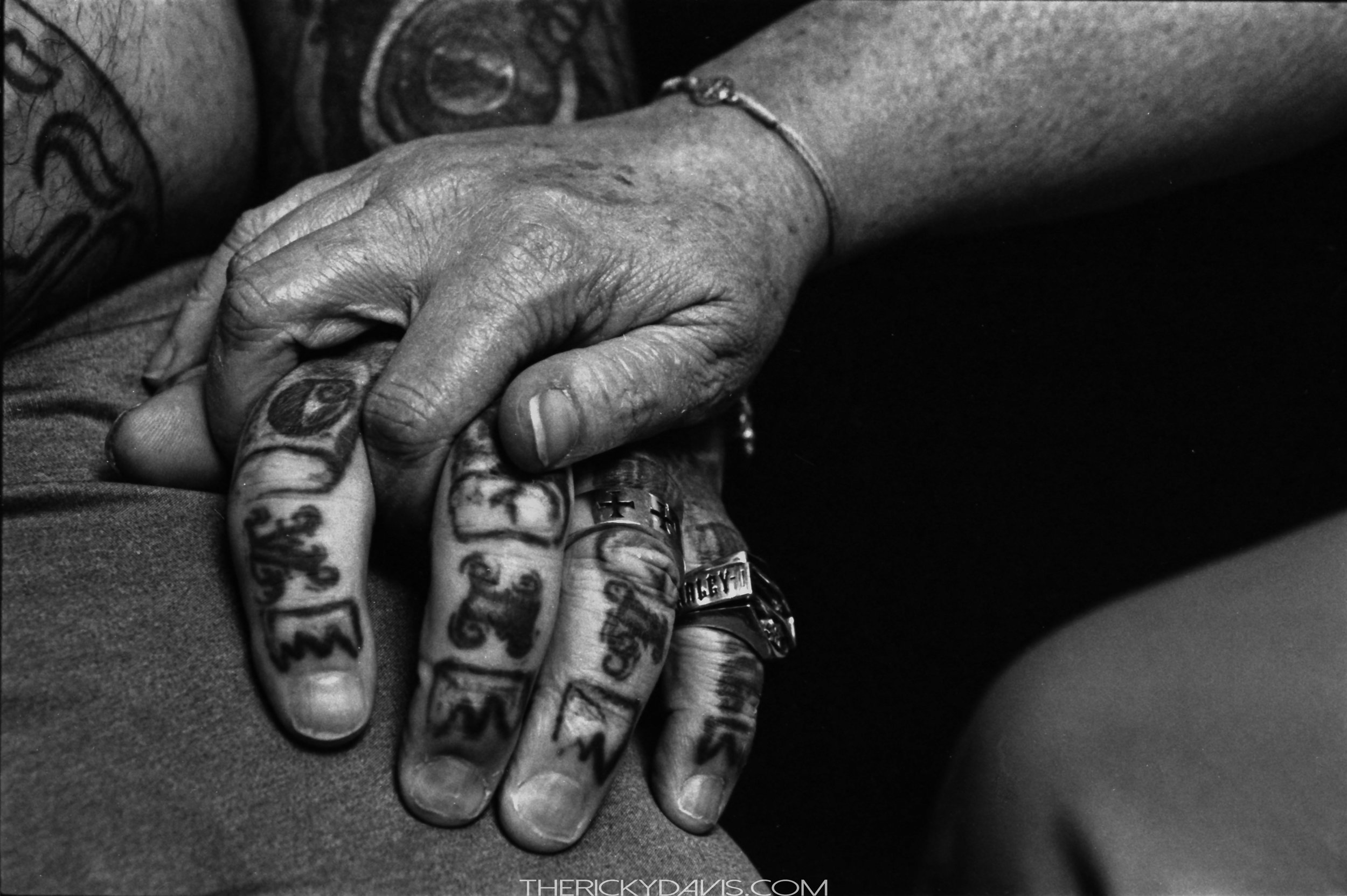
Beauty Redefined Series - Claire & Marty - Photographer Ricky Davis
Beauty Redefined Series - Post #2
"The beauty I see is the devotion I have for caring for a spouse who can't take care of himself any longer. In a world with instant gratification and throw away marriages, I believe there must be beauty in faithfulness...." Claire
We hope you enjoyed this week's Beauty Redefined Series post. Stay tuned for the next one next Friday.
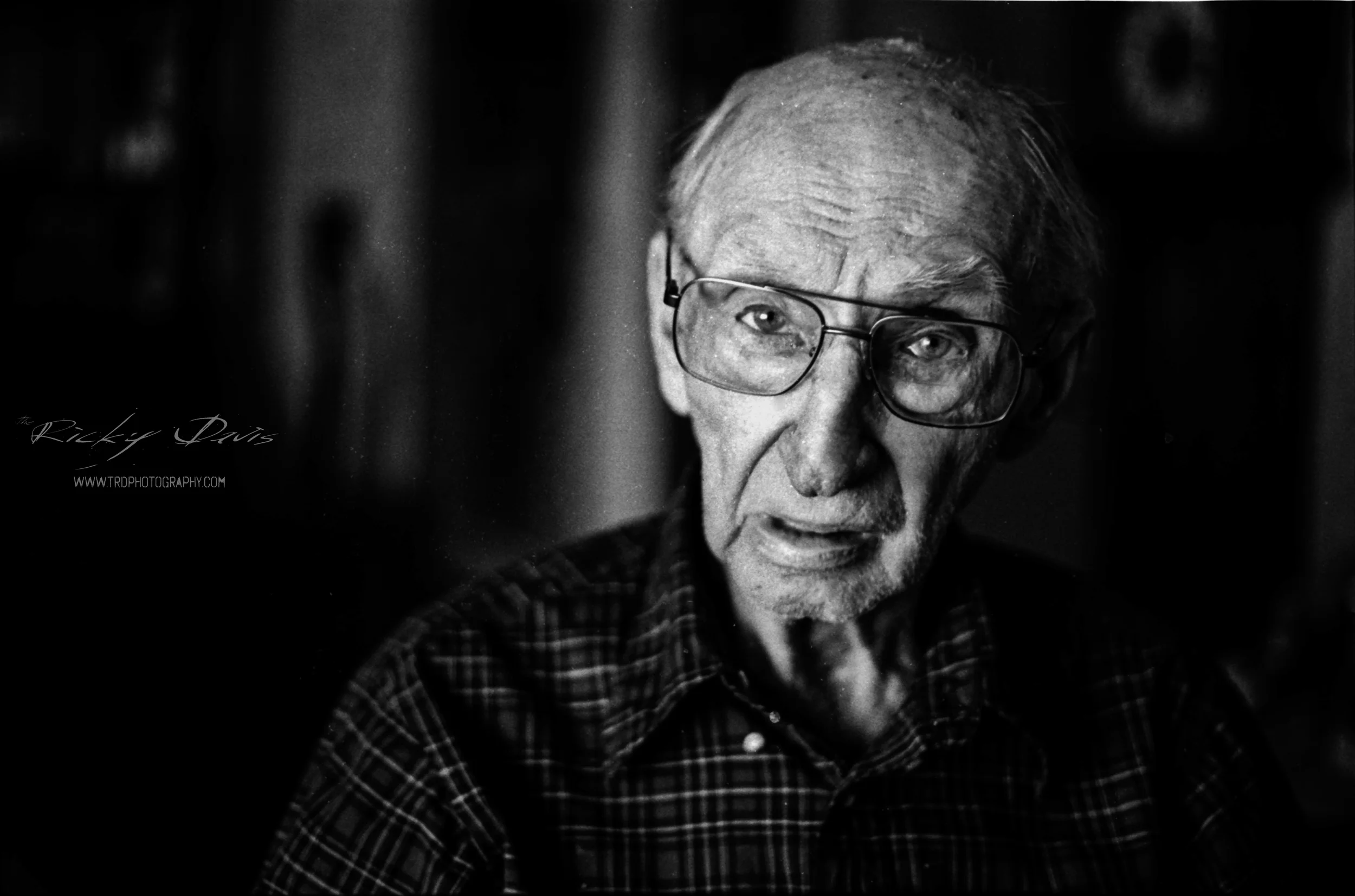
WWII Veteran Photographic Series - Pvt Charles E. Miller - TRD Photography

WWII Veteran - Army - Pvt Charles E. Miller - TRD Photography - Film - Kodak Tri X
WWII Veteran Photographic Series - Army Veteran - Pvt. Charles E. Miller
It's been a little bit since my last WWII Photographic Series session. Recently I was honored to get to sit down for a little bit and interview this amazing man. His story was really powerful, from getting paralyzed in the War, to learning to walk again, and making numerous inventions to help other people with disabilities. He worked on wheelchair adaptions, sewing machine switches, an invalid lifter for a quadriplegic veteran, and even a hand control for cars. That's just part of what this great man accomplished after his own paralysis. I hope that you enjoy hearing his words as much I have.

WWII Veteran - Army - Pvt Charles E. Miller - TRD Photography - Film - Kodak Tri X
"What's your name?"
"Charles E. Miller. Charles Eugene Miller."
"What branch of service did your serve in?"
"I was in the Army but I served all my time in the Navy. I was in heavy demolition. Other than that I can't tell you nothing else. General Whitaker took me in the office and discharged me, said I'm gonna take your rank all the way from you, and discharge you as a private. Don't ever say anything about this. If you do, there's some Japanese lawyer waiting to jump on you. So it's never been mentioned. It's a little hard to keep it to yourself, but that's the way it is."
"How were you injured?"
"It was my first mission in the South Pacific. It was island number, well I forgot the number of it. We didn't go by names, we went by numbers. We were going in on the heaviest boat, the ones where the front falls out. We hit a mine. 250lb of Japanese powder. It's much stronger than our powder, I don't know what they do to it, but it's much stronger than our stuff. I remember going up, but I don't remember coming down. Whatever hit me, hit me in mid air. They picked me up and took me back to the ship. When they got me on the ship, they thought that I was a colored man. I was a solid blood blister. I felt it hit the bottom of the boat. I thought I had better jump. It was certain suicide. I was standing right over the top of it. As far as I know, there was two others still alive"
"From your landing craft?"
"Yeah. That's the way it goes. Those things do happen."
"So you were injured on your very first mission?"
"Yeah, but I was over there for a long time before then."
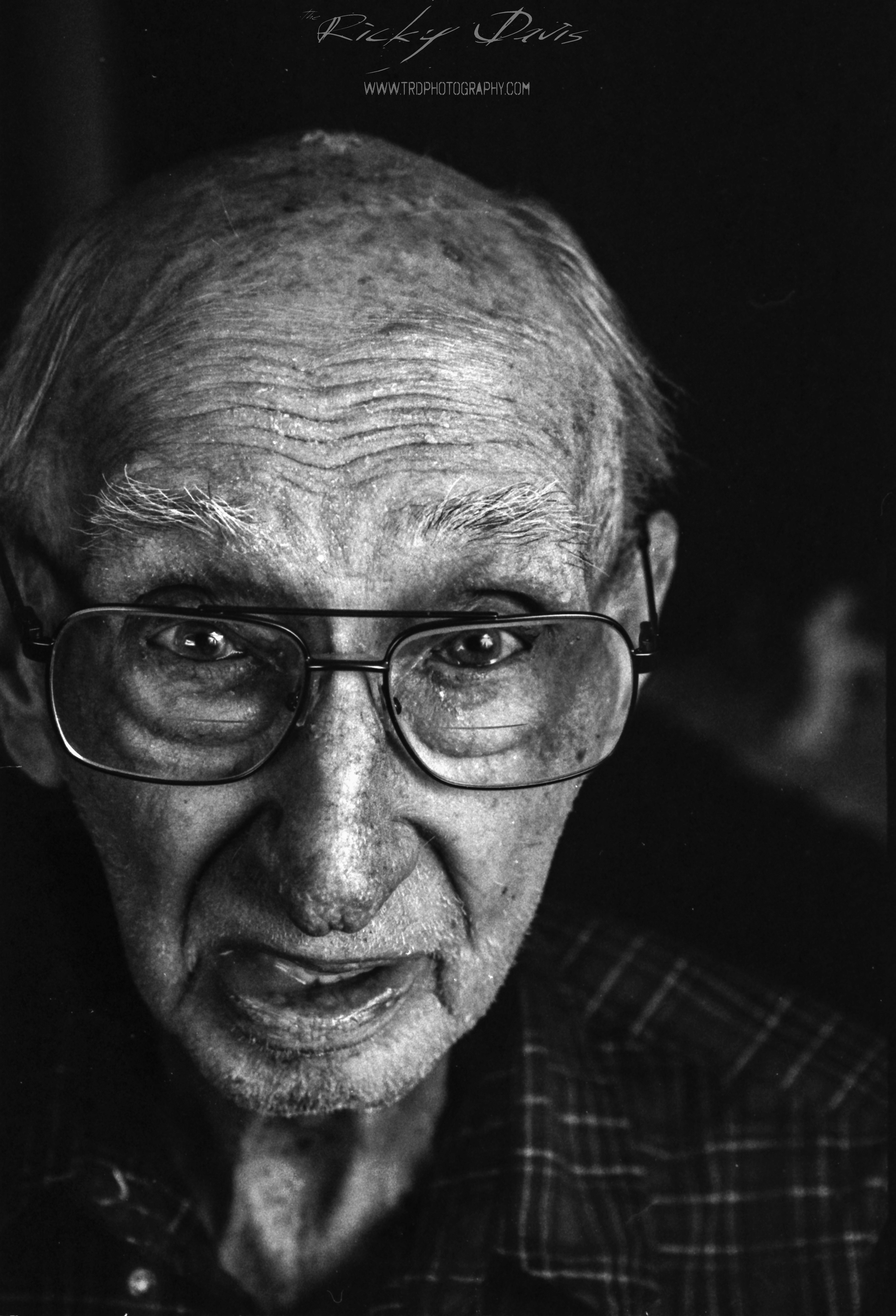
WWII Veteran - Army - Pvt Charles E. Miller - TRD Photography - Film - Kodak Tri X
"Were you drafted or did you enlist?"
"I was drafted. That's why I say that Mr. Roosevelt sent me an invitation. I came out of the service with a 50% disability. I stayed out for 8 or 9 weeks and then I went back to work as a crane operator. I started having convulsions. Epileptic convulsions. I went and had one in the hospital and they grabbed on it. But I think it came out pretty good.
"Where did you go to basic?"
"I took my basic in Camp Blanding in Florida. They transferred us to, I forgot the name of it. But me and some other boys were on a truck to Fort Riley, Kansas. A couple MP's picked us up. They asked if he were discharged, or AWOL or I forgot the name of it. About one o'clock in the morning they came and woke me up, asked me for my name and serial number. Then put me in a 41 Chevrolet and took me to demoltion school. They taught me a lot. *looking around his kitchen* You know, there's a lot of explosives in here if you know how to mix it. Oats is one of them. I had oats for breakfast. I'm liable to blow up. There's certain things I can remember, and certain things I don't. "
"Being in demolition, and with the Navy, were you part of underwater demoiltion?"
"No, we were surface demolition."
"How long were you in the South Pacific before your injury?"
"I was there a couple of months. I was just a young kid."
"What years were you over there?"
"Forty-Four."
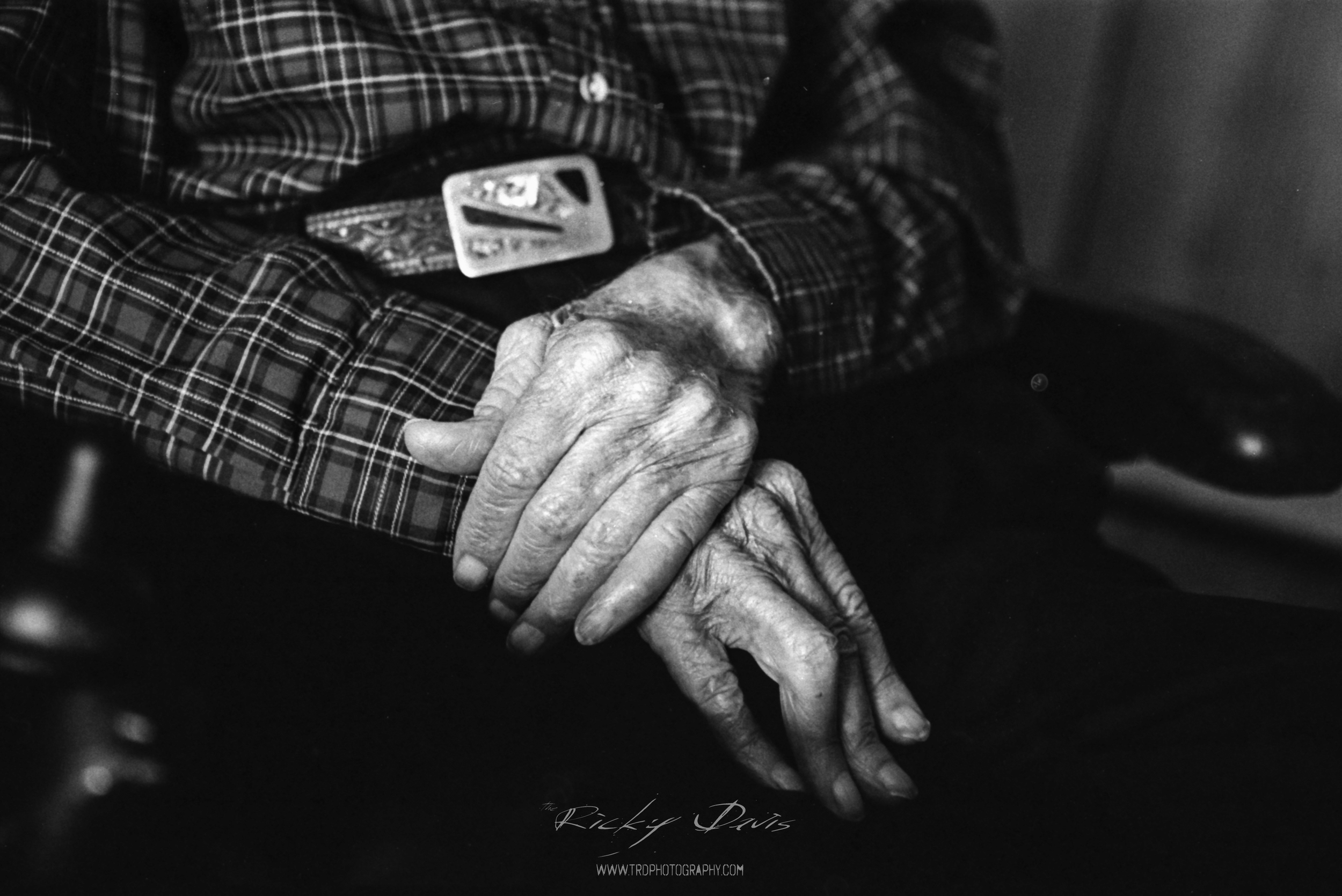
WWII Veteran - Army - Pvt Charles E. Miller - TRD Photography - Film - Kodak Tri X
"Do you remember very much about when Pearl Harbor happened?"
"Oh, I remember it happening. But nothing I could do about it."
"Oh no, I know you weren't in the service then, I was just curious as to if you remembered your thoughts on it when you heard it over the news that the Japanese had attacked."
"Oh yeah, everybody wanted to go fight then. But if you get too many people over there at once, it's trouble. The Japanese were fighting a religious thing. They thought that if they got killed in battle, they'd go to a better land. They was hard to kill. He wouldn't surrender. You had to kill him. But we went in with heavy explosives and blew up their barracks and all that stuff. But I definitely wouldn't want to live it again. I'm 93 now and I'm hanging on. "
"How old were you when you were in the Pacific?"
"19. I was just a kid. I was already married though. I got married when I was 16 and she was six to eight years older than I was. I was working for a construction company. I think she married my time book more than anything else. But she was good to me. I couldn't have made it without her."
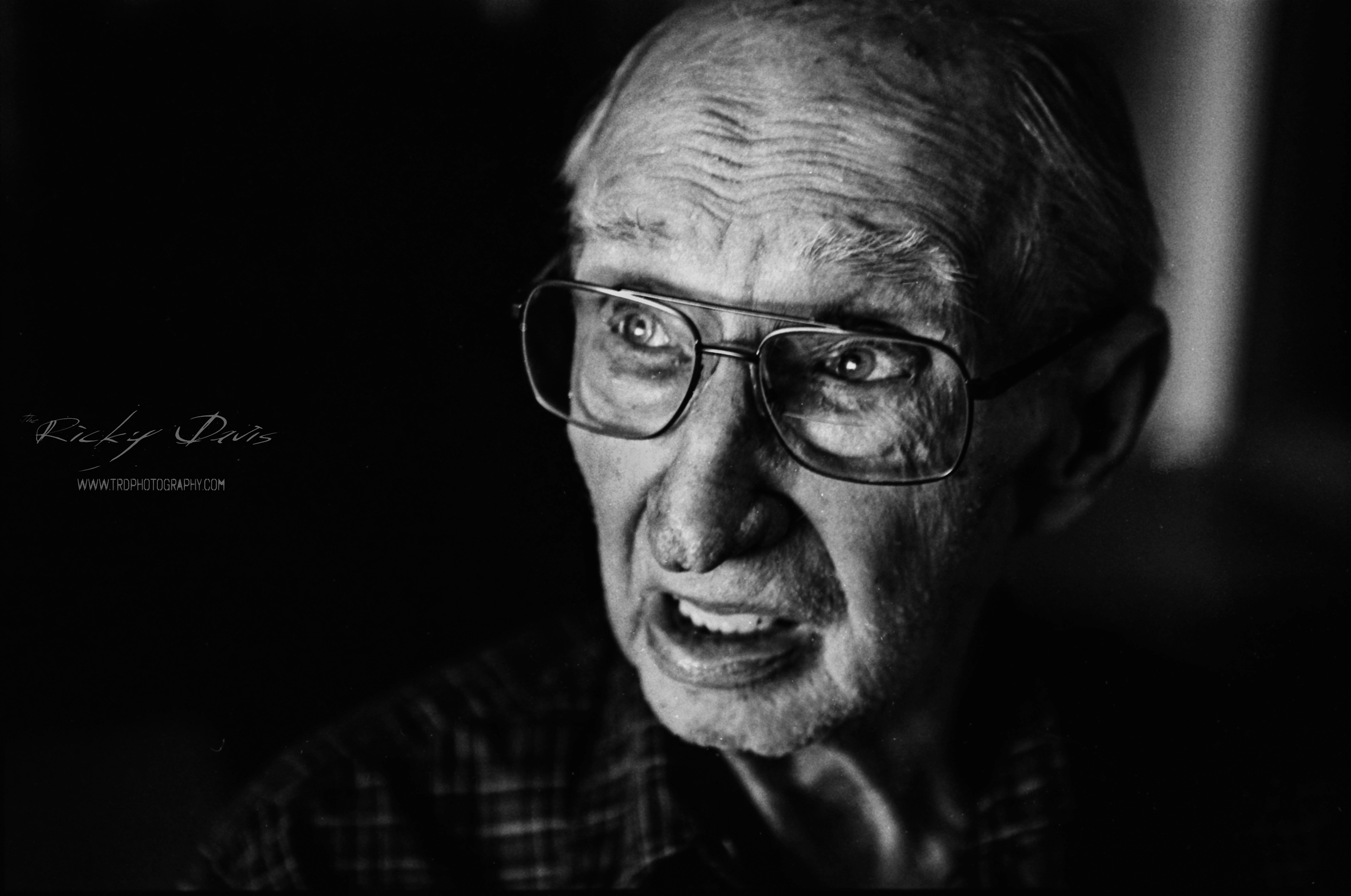
WWII Veteran - Army - Pvt Charles E. Miller - TRD Photography - Film - Kodak Tri X
"So Lacy told me that you were paralyzed. Was that in the explosion?"
"Yeah."
"But they only gave you 50% disability despite being paralyzed from the waist down?"
"Yeah, they didn't give me much. When I got out of the service, and after I got home, I started having convulsions more often. And Bill King of the Newsfree Press, he was a church member of mine. He got a Tennessee Senator, I forgot his name. There's a lot of things I should remember but I don't. "
"So you were able to teach yourself to walk again?
"Yeah, on braces. I was with Wheeland Factory for thirty years and I walked on braces every day. They were 22lbs that I had to drag around. So I worked on developing something that would be a little lighter. "

WWII Veteran - Army - Pvt Charles E. Miller - TRD Photography - Film - Kodak Tri X
Mr. Miller's granddaughter, Lacy mentioned " He actually won the Veteran Handicapped Achievement award for his work on different inventions for disabled veterans."
"That's when we started Disabled Enterprises, for handicapped people. We didn't hire nothing but the handicapped. We had one bus driver. He wasn't all there, but he was there just enough to get by. He drove the bus for us. We made pallets for several different companies here in Chattanooga. We done all right.
I ended up getting into the antique car field. I had thirteen at one time. They were everywhere. I still have a Model A and a '55 Thunderbird. I gave them to my son. He's the only one that's interested in them. You gotta be interested in something to be that close to it. The oldest car that I ever had was a 1907 Sears. It was sold by Sears Roebuck. The mail carriers used it in the South. It had wheels small enough to where they could get through ruts and not get too much mud. "

WWII Veteran - Army - Pvt Charles E. Miller - TRD Photography - Film - Kodak Tri X
"Which antique car was your favorite that you've owned?"
"I guess the Sears. I fixed it up and got it to running good. I'd go in parades and it would run just as fast the parade. I'd get up in the front, just behind the horses. When I got done there was green sidewalks from the horses. "
"We don't have parades like we used too. I remember when I was a kid going downtown the the Armed Forces/Veteran parades and they were such a big deal. People were everywhere. I remember seeing Desmond T. Doss being honored a couple of times and we just don't have that anymore."
"Every now and then you see a platoon march, but that's about it. They don't put any money into it. The people have lost all of their pride. "

WWII Veteran - Army - Pvt Charles E. Miller - TRD Photography - Film - Kodak Tri X
I want to thank you for taking the time to read just a glimmer of Pvt. Miller's story. I want to give a really big thank you to his granddaughter, Lacy Stoglin, who set up this session. If anyone has any WWII, Korean, or Vietnam Veterans in their family, please reach out to me. Sadly, I can't travel all over the country, but anyone that I can meet locally or on trips, I would love to sit down and do a portrait session and listen to their story. This entire set was shot using Kodak Tri X film.
Ricky
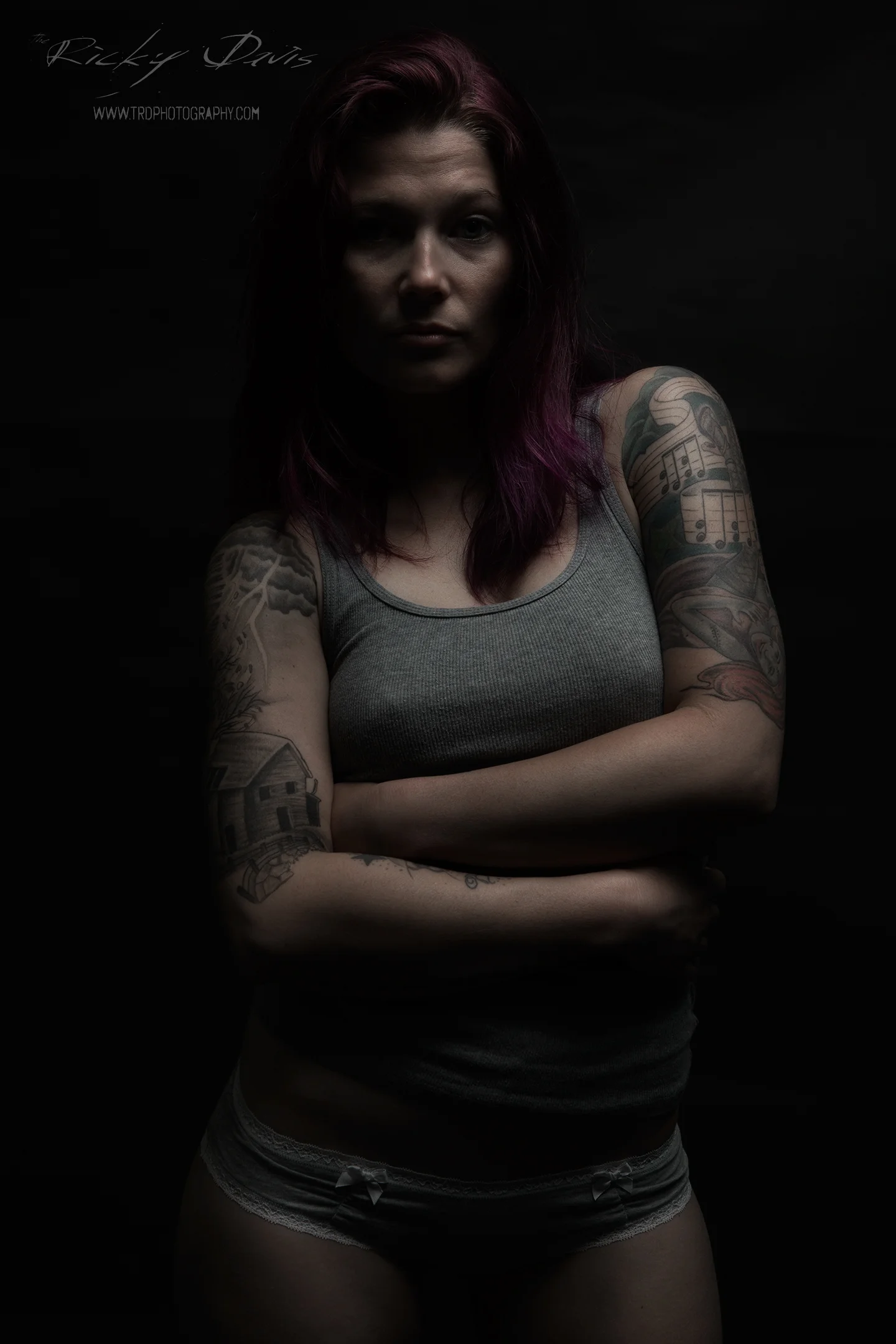
"What Makes You Feel Beautiful?" Series - Leighann W. A TRD Photography Project

The "What Makes You Feel Beautiful?" Series - Leighann W. A TRD Photography Project
"What Makes You Feel Beautiful?" The Series -
"What makes you feel beautiful?"
Leighann - "What most people see "Beauty" as, is overrated IMO. I'd rather people look at me and be inspired. That's where real beauty comes into play for me. When my nieces and little cousins look up to me and say they want to BE like me, THAT's what I live for. I don't want them to feel you need to be drop dead gorgeous to be somebody. I want them to know that it's being true to yourself that is beautiful. That's what makes me feel "beautiful" is being an inspiration to people who are looking up to me as a role model."
WWII/Vietnam Veteran Master Sgt. Cletis Bailey, Air Force - Photographer Ricky Davis
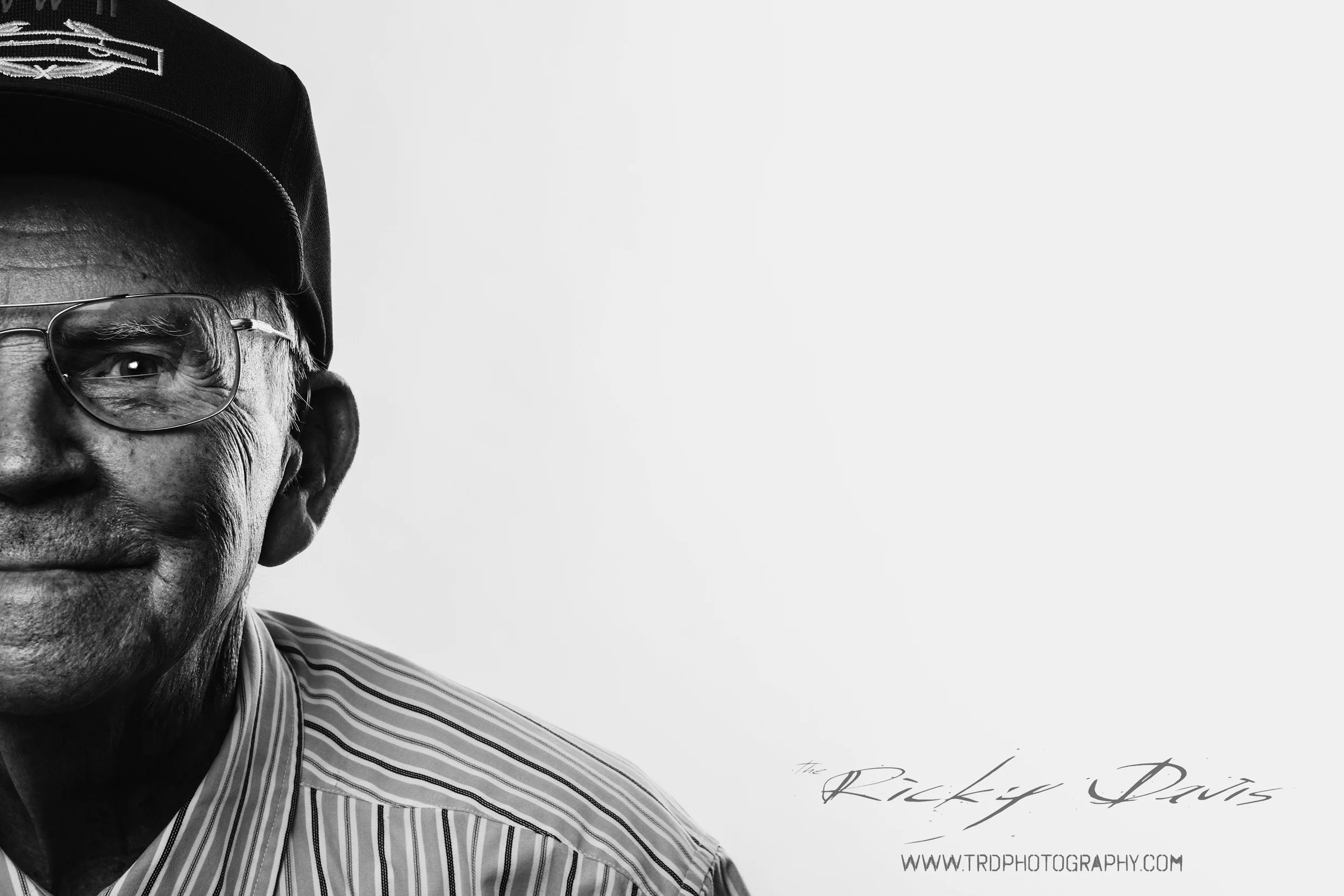
WWII & Vietnam Veteran - Master Sgt. Cletis Bailey, Air Force - Photo by Photographer Ricky Davis of TRD Photography - Canon 6D.
WWII & Vietnam Veteran - Master Sgt. Cletis Bailey
Meeting Mr. Bailey has been one of the most pleasurable experiences that I have had. This man is so good natured and friendly. His was a very interesting story and actually spans two of America's biggest conflicts as he served not only in World War II, but he also served two tours in Vietnam.
"I was drafted and took my basic training in Camp Blanding, Florida. About seventeen weeks of intensive training and pretty soon I found myself in Germany. I was assigned to the 84th Infantry Division and that was at the tail end of The Battle of the Bulge. I think I joined up with them in Belgium and then we went into Germany, up on the Roer River. We kinda dug in there and waited for the crossing. It had flooded. I joined as a replacement. Later on, when the situation had normalized, we made that river crossing and headed on into Germany. :
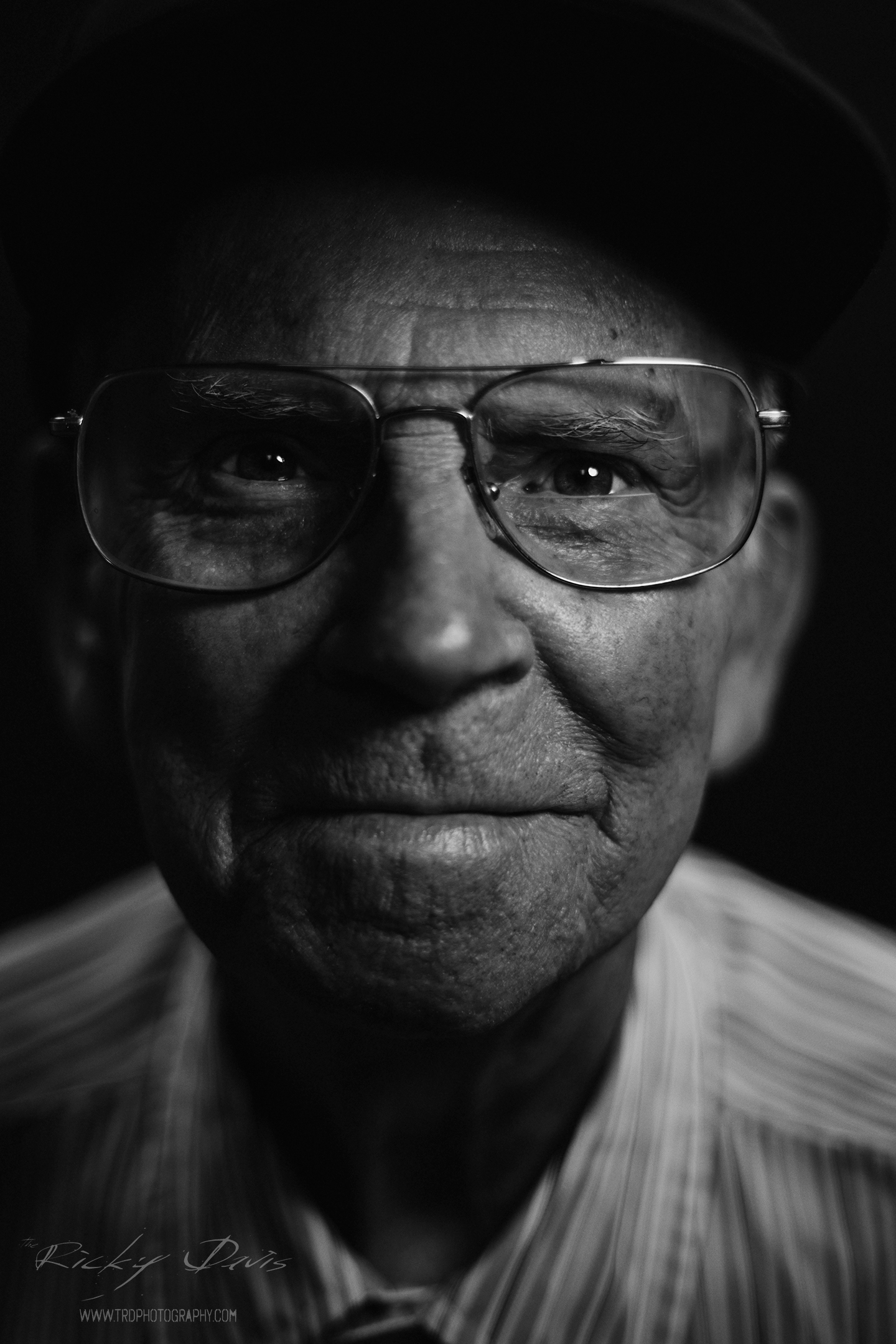
WWII & Vietnam Veteran - Master Sgt Cletis Bailey - Air Force - Photo by Ricky Davis of TRD Photography - Canon 6D.
"Being in infantry, we did a lot of walking. The main activity that I was involved is was there was three of us after we finally took this town. We had lost 8 or 9 men taking that town. It was well defended with German paratroopers. After we had finally crossed the field, there was three of us assigned to go back across that field because we was short of ammunition. I didn't volunteer for that either. I didn't have a chance to back out. So anyway, we made it but there was a German sniper firing at us all the way over there. You could see the bullets hitting in between us. So one of the guys said I ain't about to go back over there. We'll get killed. But with all the stuff happening over there, tree bursts and mortars we'll surely get killed if we'd stayed over there. So we made it back across the field. But with all the shelling coming in, when we were heading out one of the guys up ahead got decapitated. "
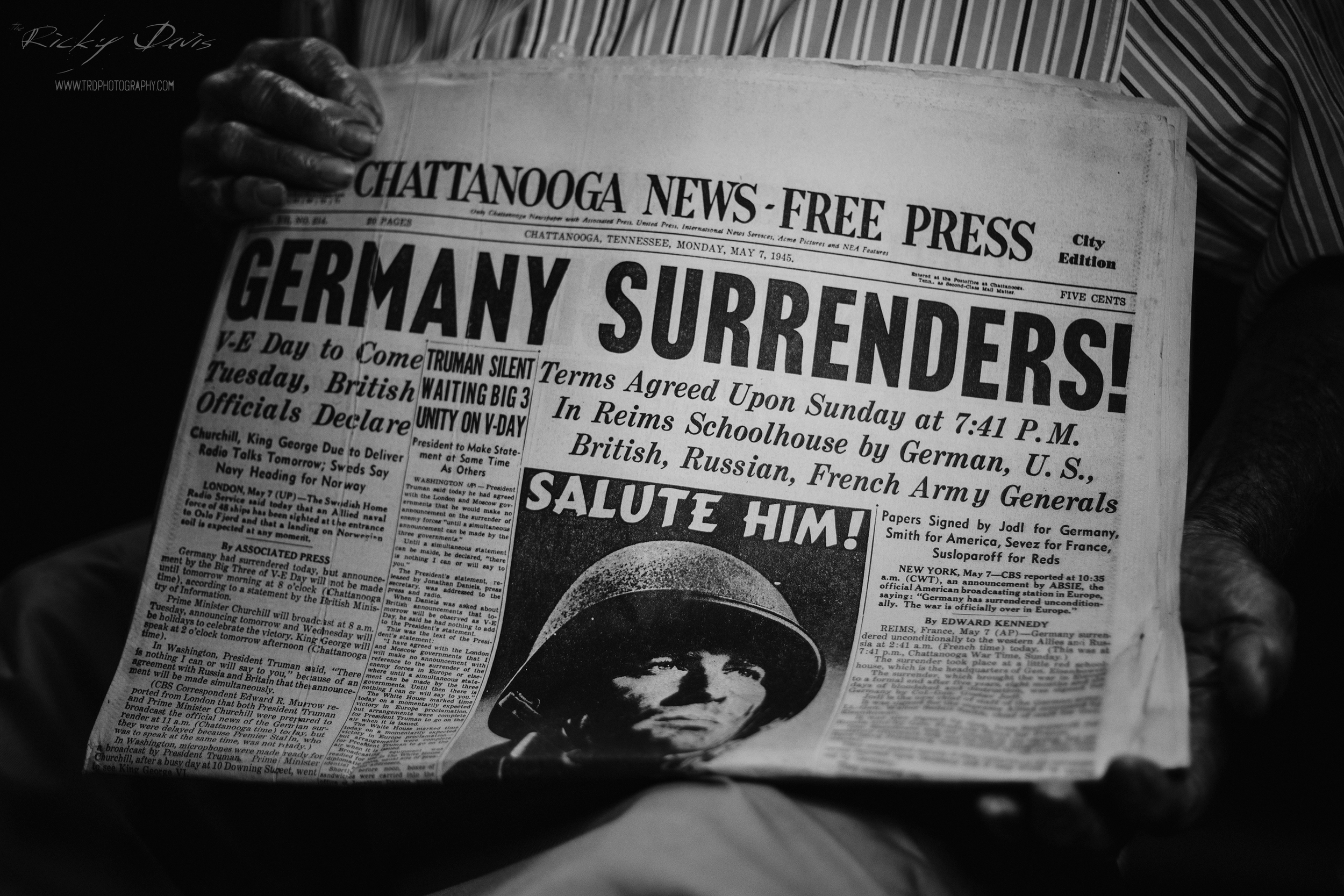
Original Paper from 1945 of the Chattanooga Free Press - Photo by Ricky Davis of TRD Photography - Canon 6D
"At the end of the War I was at the Elbe River. I came back to the States in 46, and stayed in the reserves for a little bit. I was working in Chattanooga but all of my friends had gotten out or left, so I decided to get back in the service. I went and got a little better education and then I was able to get in the Air Force. I still keep in contact with two or three guys I served in the 84th with. One of them was talking about when we shared a hole on the river. The Germans were across the river and they'd take shots across the river. They called us 'Roosevelt's Henchmen'. They say 'Roosevelt's Henchmen we're going to annihilate you.' So that was interesting. The was my introduction to German soil. That's where I earned my combat infantry.
I feel like I really played a small role. We had lost so many men, that's why I was selected as a replacement because we'd lost so many men at the Battle of the Bulge. They are the ones the did it. It was tragic as it was getting close to the end and losing so many men. I loved the old timers. One fella that I had hunkered down with the night before taking one stinking town, he got killed. Another one told his buddy that he had a feeling that he wasn't going to make it. They called him Chief because he was Indian. He got killed taking this town. They told him to just stay back, but he said no. I've been with you this long. He had been with them a real long time. That's the way it happens some times. "
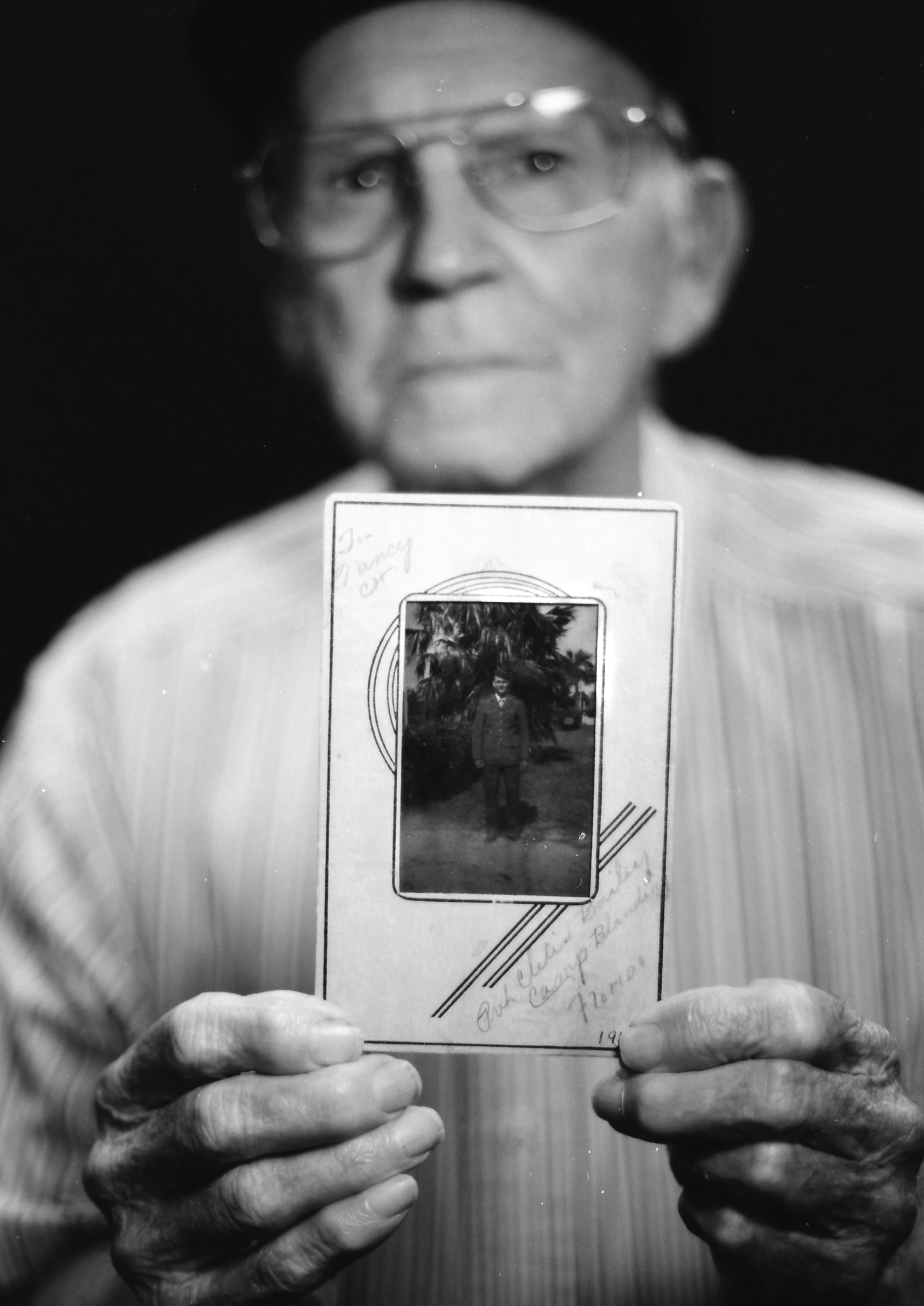
Master Sgt. Cletis Bailey - Air Force holding a photo from his younger days. Photo by Ricky Davis of TRD Photography - FIlm - Tmax 100
"In Vietnam, it was a lot different. I didn't have to go on any patrols or anything like that. It was a different story in Vietnam though. I had a desk job, I was in accounting and finance taking care of military pay and travel. I needed some information from personnel next door. I walked over there and was talking to the sergeant and got what I needed. I stepped back outside and a rocket came in and took off the whole end of the building. It killed him. That was pretty close. So you never knew when you were gonna get it over there. Whether you were at a desk or out with the infantry in the field. The rockets were always coming in. But I led kind of a charmed life over there. I'm glad to be here, I'm glad to be anywhere, I enjoy living. "

Master Sgt. Cletis Bailey - Air Force - Photo by Photographer Ricky Davis of TRD Photography - Canon 6D.
To finish talking with Mr. Bailey I asked him "with serving in both World War II and in Vietnam, what was the difference in the way that the soldiers were treated coming back from the war."
"That was a different story wasn't it? That war just wasn't accepted. So Vietnam Veterans just got the short end of the stick so to speak, they got mistreated. Through no fault of their own, we were just doing our job. It was a lot of politics I think. We lost a lot of men over there. I went to Washington DC and visiting the Memorial. I found Sgt. Dark's name, the fella that got killed, and I made an impression. "

Master Sgt. Cletis Bailey - Air Force - Photo by Photographer Ricky Davis of TRD Photography - Canon 6D.
I thoroughly enjoyed my time speaking with and listening to Mr. Bailey. He had so much life and zeal about him. He really brought a ray of light into my world and I hope that his story resonates with you and touches you as well.
If you know any World War II Veterans, Korean Veterans, or Vietnam Veterans, I would love to include them in my project and share their story. Please email me at trd@trdphotography.com
WWII Veteran Photographic Series - Sgt. Ferdinand Moreno - Photographer Ricky Davis

WWII Veteran Photographic Series - Sgt. Ferdinand Moreno - Photographer Ricky Davis - Shot with Canon 6D.
WWII Veteran Photographic Series - Sgt. Ferdinand Moreno
I've really been looking forward to this second entry in my series of WWII Veteran Portraits. This particular session was probably the toughest photo session on me personally that I've ever shot. When I first had the idea of doing this series, I pictured getting to sit around talking to veterans who were anxiously wanting to share their stories with whoever wanted to listen. With the first session, I was told that Mr. Davis had dementia. When I arrived he had forgotten a lot of things, but it was very pleasant conversation. With Sgt. Moreno, again I was told that he had dementia and I expected something similar to the conversation with Mr. Davis. I was mistaken.
When I arrived I found that his condition was a lot different than Mr. Davis. Sgt. Moreno's health is where he cannot speak. I found out from his nephew, who is his caretaker that he really hadn't been able to speak for a couple of months.. Even though he couldn't talk, I had a conversation with him, and his eyes, his eyes really reached into my chest and I felt like it was ripping my heart out. I've never been impacted by a session like I was by his. On his photos, I didn't shoot as many of Sgt. Moreno himself, because I wanted to capture his dignity and with his health, it was harder to do that. Please read further though as I was able to talk to his brother who shared with me some stories of his time in WWII, and Sgt. Moreno had some amazing war trophies that he brought home from the War that I photographed as well.
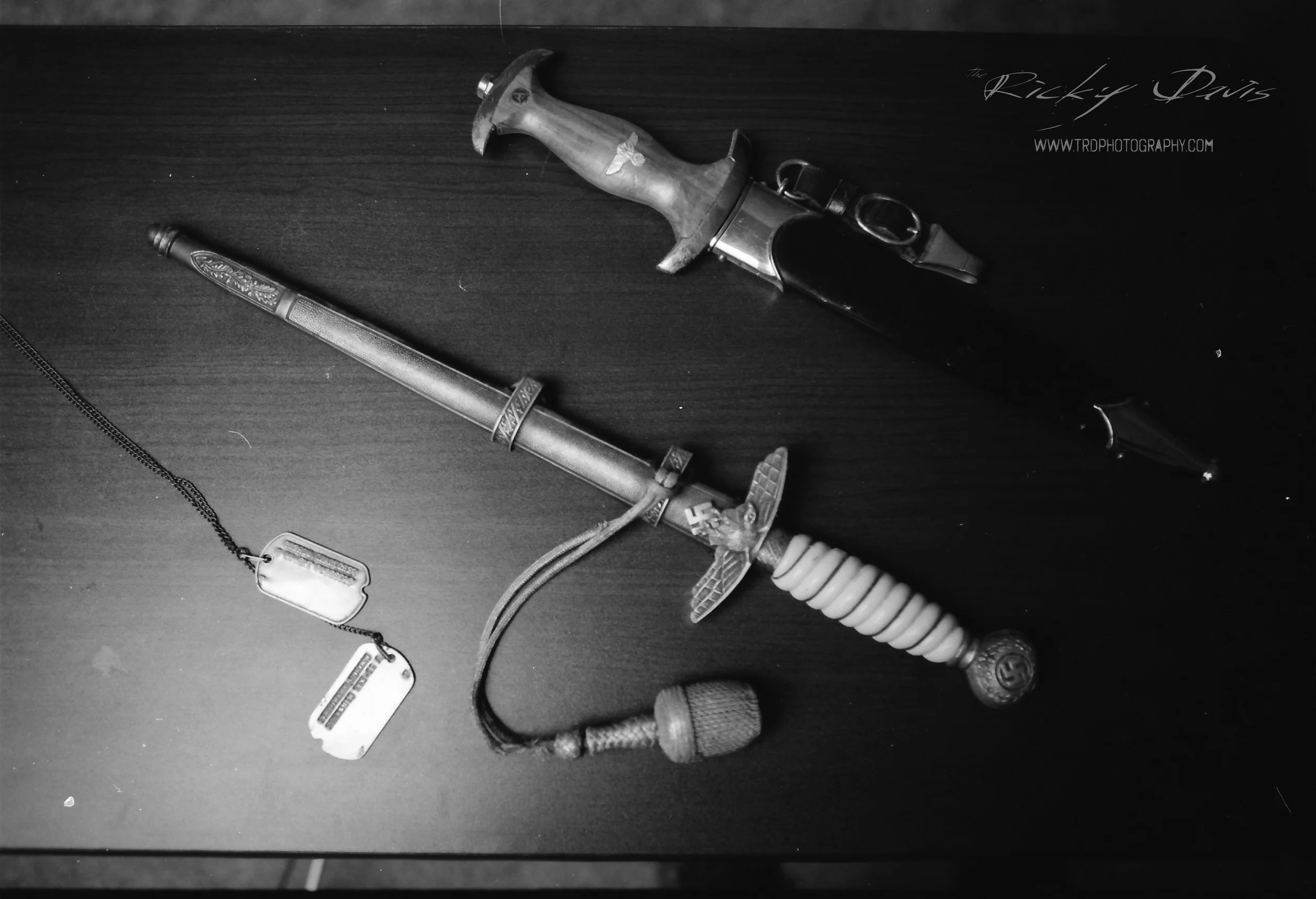
WWII Photographic Series - Sgt. Ferdinand Moreno - Photographer Ricky Davis - Film - Expired Kodak Tmax100
It took a couple of weeks but I was finally able to speak with Sgt. Moreno's brother, Malcolm, about World War II and what his brother did during the War. This is what I was told.
Sgt. Moreno was drafted into the Army. He didn't know which company or anything like that, but he said he was supposed to be in a tank. Sgt. Moreno had told him about the army showing photographs of what was happening with the German's armor piercing bullets. How they'd cut through the tanks and explode. Around that time they were asking volunteers to go into the infantry and Sgt. Moreno volunteered to go into infantry instead.
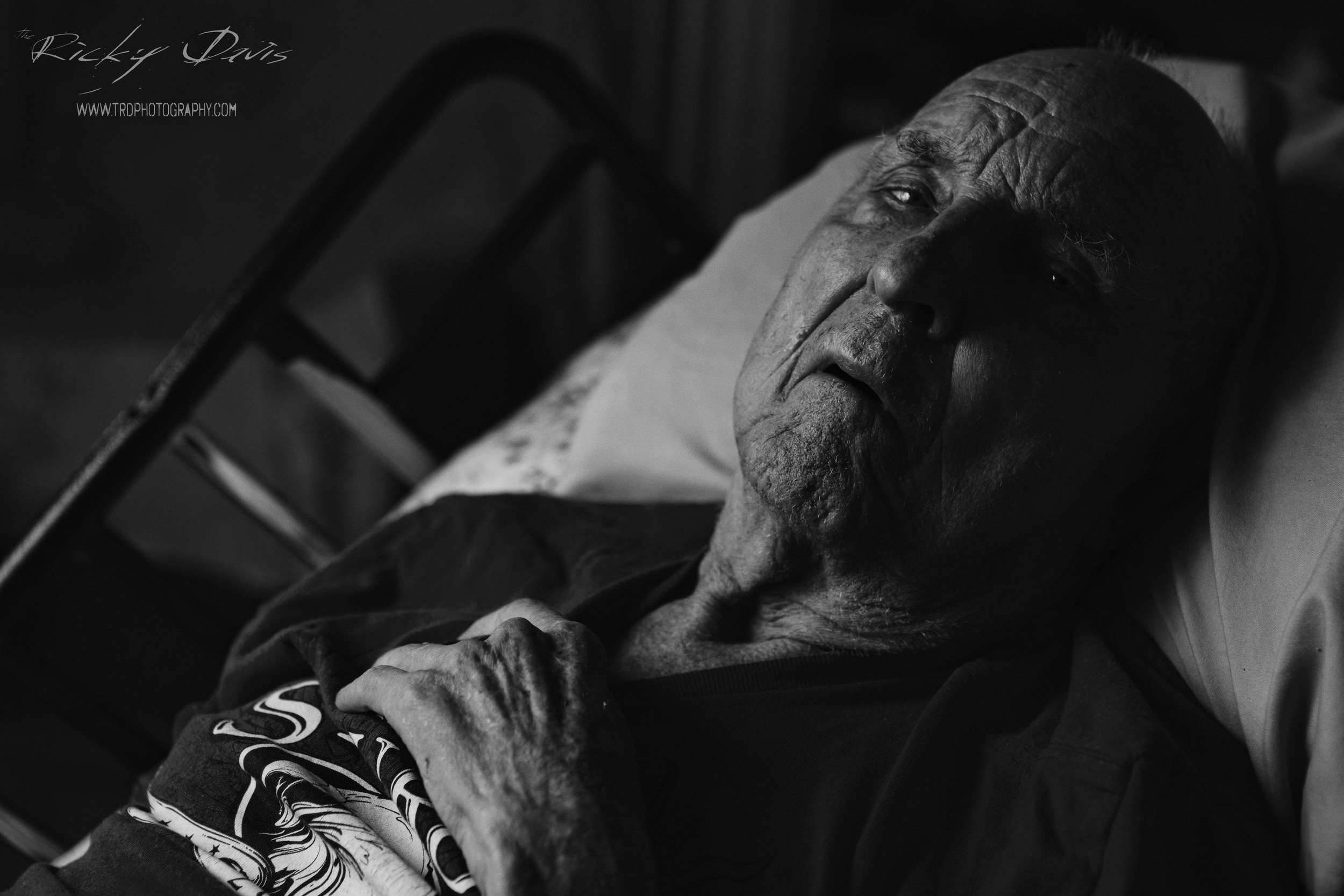
WWII Photographic Series - Sgt. Ferdinand Moreno - Photographer Ricky Davis - Shot with Canon 6D.
Malcolm told me that Ferd, as he affectionately calls his brother, didn't really like to talk about the war. He would only tell a couple of stories. He had a lot of demons from things he saw in the war. He helped to free a couple of the concentration camps and said that he would rather die than to ever surrender to the Germans. I'm going to share with you a story that I was told by Malcolm about a time that Sgt. Moreno was involved in an ambush.
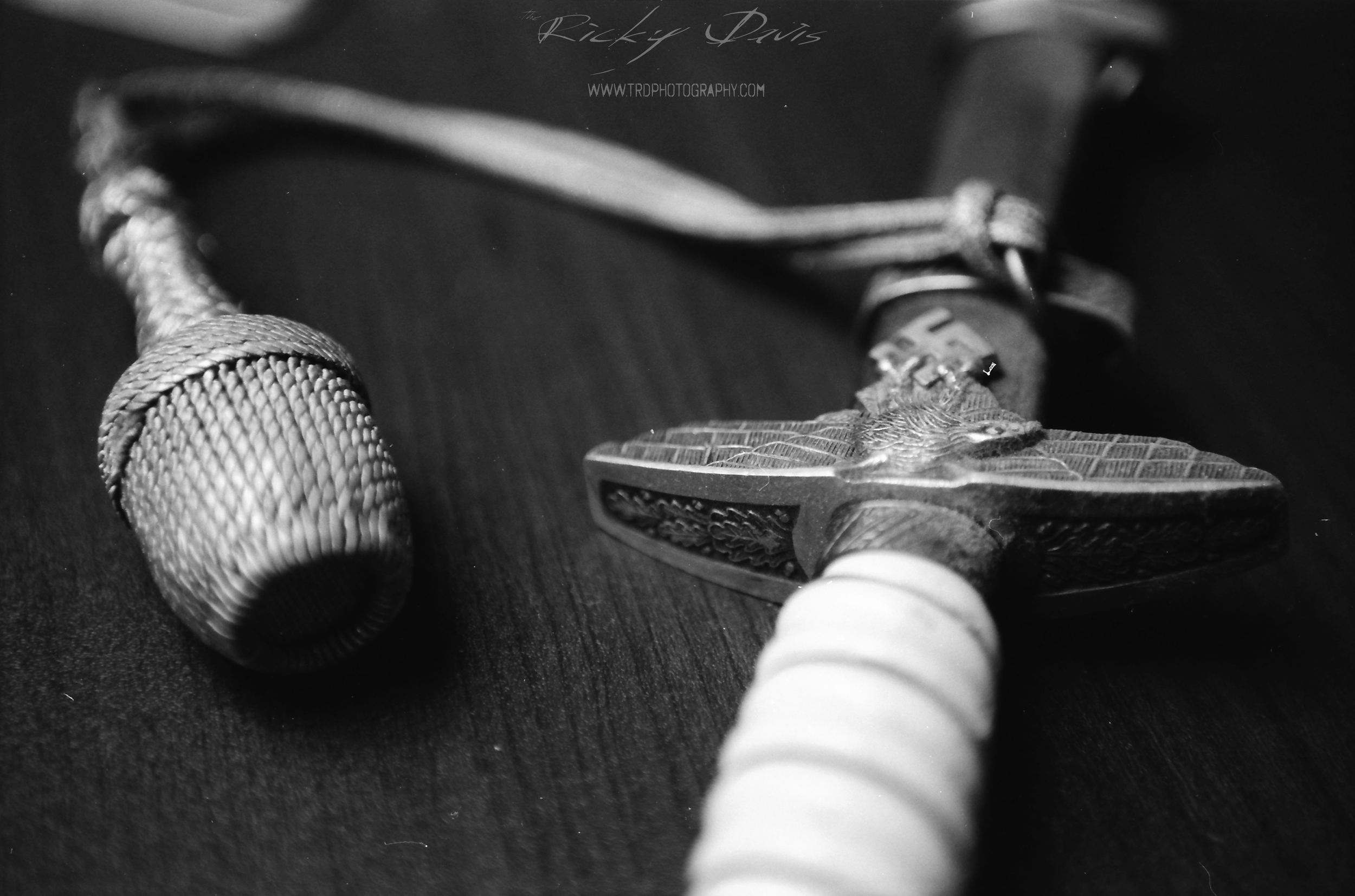
WWII Photographic Series - Sgt. Ferdinand Moreno - Photographer Ricky Davis - Film - Expired Kodak Tmax100
One day in a village in France (he didn't know the name. Only that it was a really small village) Sgt. Moreno and one of his good friends were driving through in a military jeep. The town had been attacked and they were looking but they couldn't find anyone alive. Everyone was dead. They were debating what to do when from behind one of the small buildings, two Germans stepped out with guns trained on them and in perfect American English told them to get out of the jeep. Ferdinand was 6'4 and was crammed tightly into the jeep, which made getting out a little bit difficult. The Germans told them to throw down there weapons while they were getting out. They continued to move slowly...

WWII Photographic Series - Sgt. Ferdinand Moreno - Photographer Ricky Davis - Film - Expired Kodak Tmax100
Ferdinand's mind was racing and as he was moving to get out of the jeep, he noticed that the Germans had turned slightly and weren't paying close attention. He quickly grabbed his gun and fired a slew of bullets into the Germans, killing them. Sgt. Moreno and his friend had seen a ditch that wrapped it's way around the small village a little ways away and made a dash for it. As they reached it, more German's opened up on them. His friend was shot through the head and fell dead instantly. Sgt. Moreno had bullets pierce his shirt but didn't even get a scratch, just a few holes in his shirt. He hunkered down in the ditch and crawled down a ways. He peeked up, and saw German faces looking out of windows in some of the buildings. He fired, and the German dropped. He kept moving and firing at different Germans as they were trying to pinpoint his location, unsuccessfully.

WWII Photographic Series - Sgt. Ferdinand Moreno - Photographer Ricky Davis - Shot with Canon 6D.
Slowly, Sgt. Moreno made his way back towards his lines. I was told that he killed 40 Germans. I'm not sure if that was on this mission, or in total during the war. His nephew had told me that he heard he killed 28 Germans and that Sgt. Moreno was haunted by his past throughout his life. There's probably no real way to know, and that number isn't the thing that really matters.
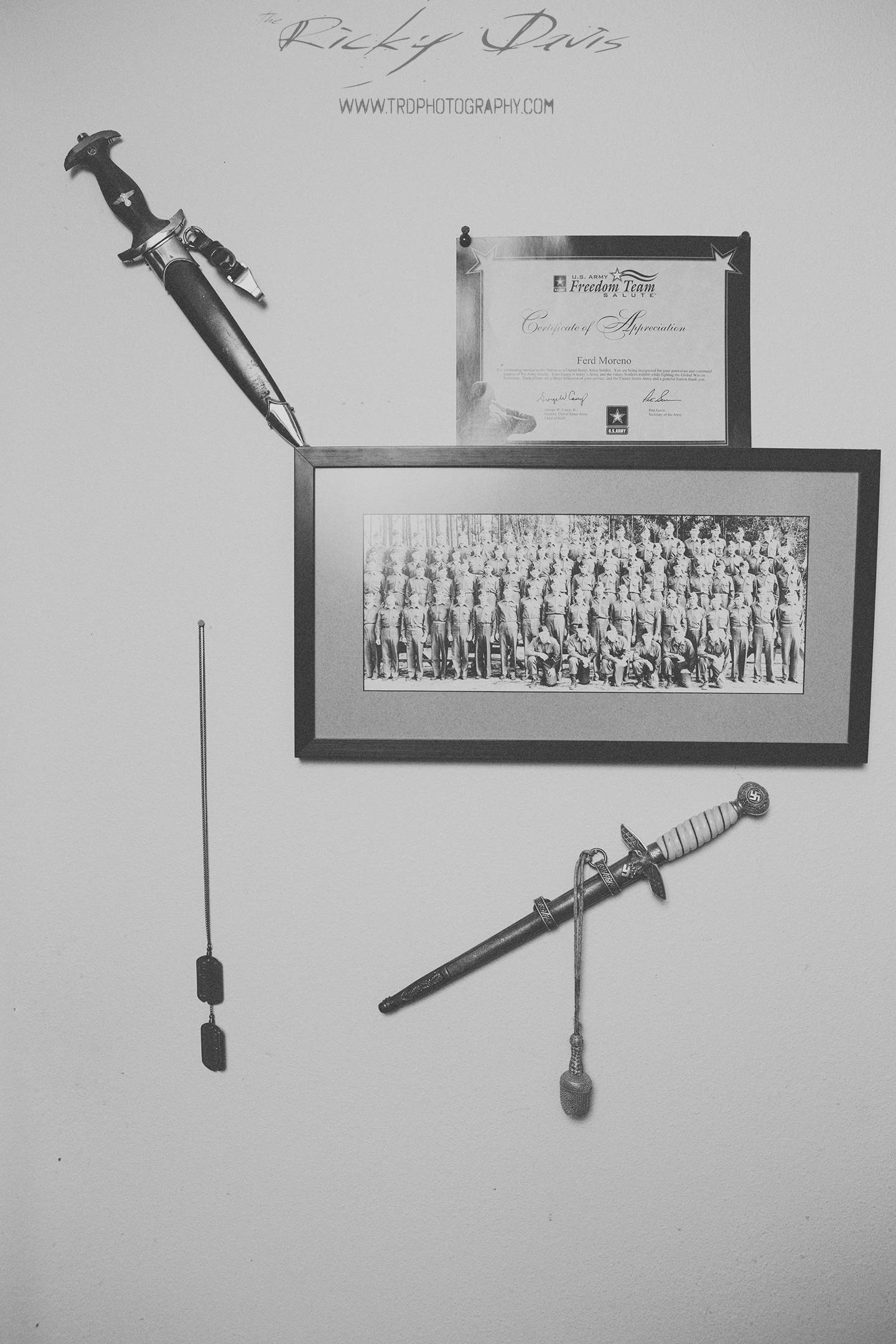
WWII Photographic Series - Sgt. Ferdinand Moreno - Photographer Ricky Davis - Shot with Canon 6D.
I feel incredibly blessed to have gotten to sit and meet this American hero. It's still hard for me to look at the photos, his eyes still just cut right through me. When you think about the age that these men and women were living in, and the evil that was being wrought upon the world and spreading across the European continent at the time, you realize.he wasn't a hero for killing Germans, he was a hero for answering when his country called. He was a hero when he helped to liberate these camps where men, women, and children were emancipated, raped, and even murdered. I personally can't imagine the things he saw, nor can I imagine the things our servicemen see and deal with now. We have to hold onto our past and learn from it to get to where we need to be tomorrow, and grow as human beings. Sgt. Moreno also was honored with the Bronze Star for his service in WWII. I hope that you enjoyed reading a little bit about this man, and his service to our country. If you did, feel free to share this.
Ricky
Seeing Yourself in Beauty and in Decay...Photographer Ricky Davis
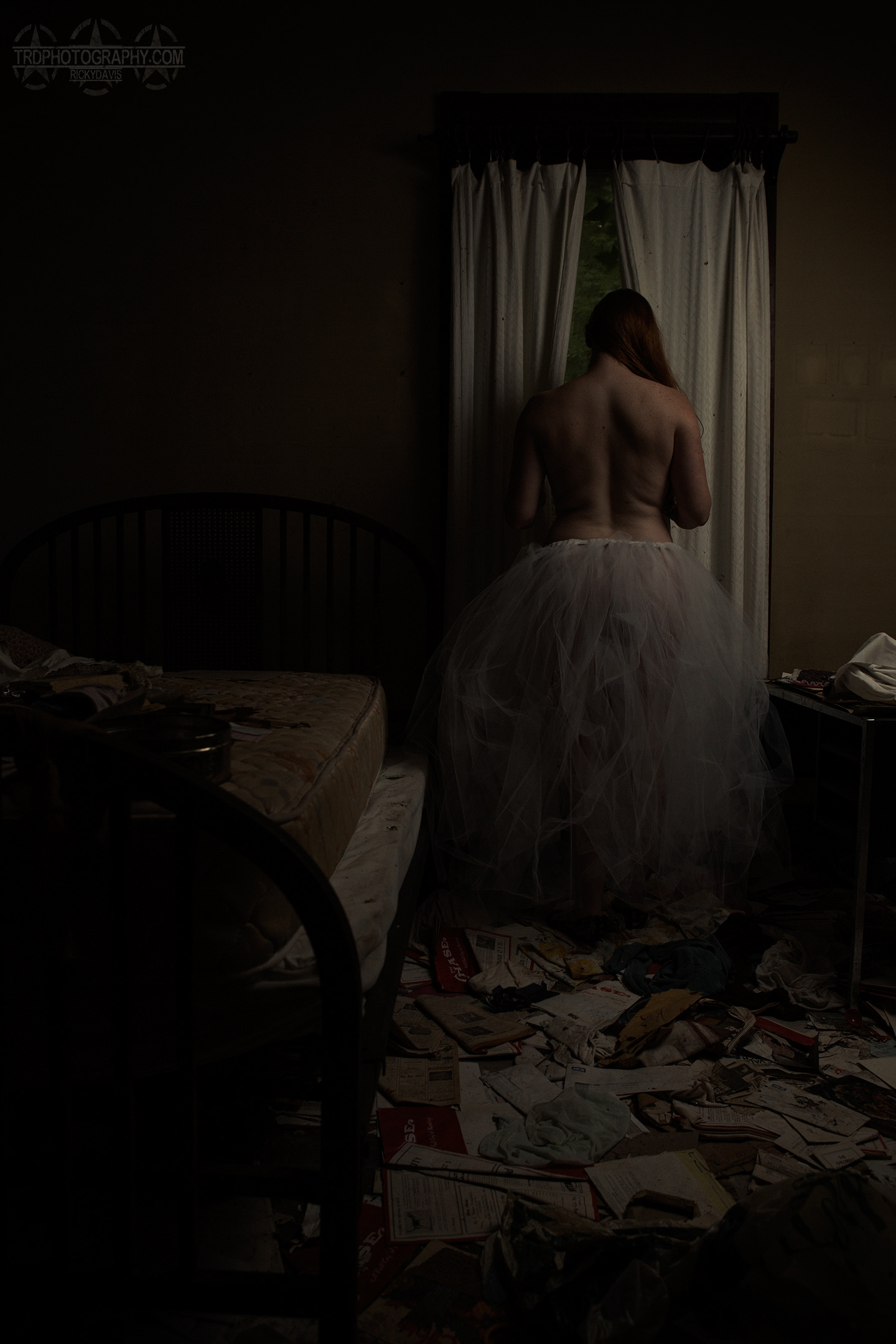
Beauty in the Decay Series - The Window - Model Liz Price - Photographer Ricky Davis - Shot with Canon 6D.
Seeing yourself in the Beauty and the Decay – By Ricky Davis
Back in 2013, I began a series which I titled Beauty in the Decay. I had been inspired by the work of the amazing Karen Jerzyk who goes into abandoned buildings and shoots nude models. The work is mind blowing and very powerful. Now I don’t shoot nude models, the most that I shoot is implied, but I really liked the idea of doing a series that pits beauty in the midst of decay, from my perspective. I feel that this can open up a lot of questions. What is beauty, really what is decay?
I shot two photos for the series in 2013, and none in 2014. I got a little off track. Recently I decided I wanted to began it again and had the opportunity to work with the amazing Liz Price for a new image to add into it.
A few weeks ago I posted the image above on Facebook and Instagram and I asked the question of what people feel, or what are their thoughts regarding what’s happening in the photo. I held my own opinion back until now. I wanted to share a few of the responses that I received about this photo.
“She feels alone in a society that says her body doesn’t fit the standards for beautiful.” Amanda C.
“Longing for her dreams, hope that’s lost” Carol Ann M.
“She’s feeling embarrassed or shunned. Lack of confidence, yearning to be accepted.” Kellie H.
“I see someone who has hit rock bottom, and this is the moment she decides to take her life back!
I feel like her thoughts are, “screw the world! Wait until they see what I have coming for them!” (In a positive sense)
For me, it seems like a moment of transformation!” Trevor L.
“Remembering what once was…” Christy G.
” I see someone reflecting waiting for a change who is to know if it is good or bad” Kennedy G.
“Loneliness looking out into the darkness for a single ray of light.” Gregory A.
Those were responses on Facebook, here’s some of what people on Instagram had to say.
“A very foreboding, dark, & sinister look. Emotionally I’m intrigued on what the subject sees outside the window.” VIntageterrance
“I feel sad. I feel like she got left at the alter and she is soo misrable she still has on her wedding crenlen slip, and is staring outside waiting for her groom to show up…..” Mrsham1993
“To me it feels forlorn…like she’s waiting on someone who never came” DarthCrowe
As I started reading the comments as they were being posted, the thought resonated with me, especially as I knew a few of the people commenting, with things that were going on in their lives. They weren’t necessarily just viewing Liz as a model in some far off photograph, some were seeing themselves in her place. My idea was justified a few minutes later when Carol Ann commented ” You know, after reading everyone’s response, I think that our critique is how we actually feel unsure emoticon or maybe it’s just me.”
So what is the purpose of art? Sometimes I think it’s helpful for us to grow and to sort through things that we are dealing with when we can step out of ourselves and see it in third person. Much the way that some were able to step into Liz’s position and relate.
For me, this photograph is a symbol of hope and beauty. Yes, the room is trashed, and it’s dark and bleak. Yes, she’s not airbrushed, liquified, and the like. It’s gritty and the location doesn’t seem too inviting. The curtains to the window are drawn, except for where she’s holding them apart. She’s not looking behind her at the disheveled mess that’s in the past, but she’s looking forward through the window into what’s to come. Too often we focus on the distractions around us instead of looking ahead. We don’t know what’s to come, but we already know what’s behind us. That’s what it makes me feel anyway.
I hope that you like the image and will stay tuned for more.
Ricky
If you’d like to work with me, trd@trdphotography.com
WWII Veteran Photographic Series - Pvt. Ralph Davis - Photographer Ricky Davis
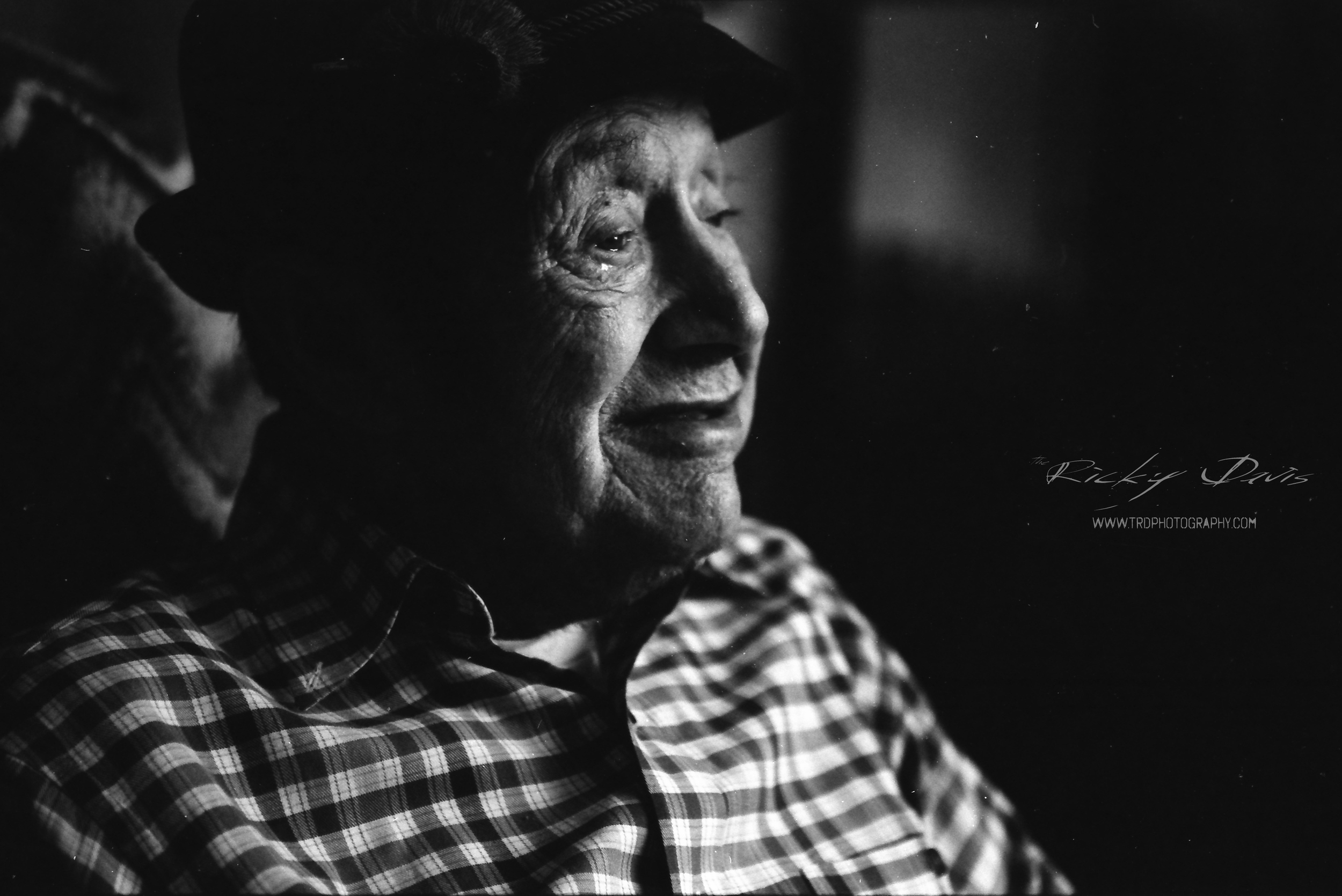
WWII Artilleryman - Pvt Ralph Davis - Photographer Ricky Davis of TRD Photography - Expired Kodak T-Max100 Film -
WWII Veteran Photographic Series - Private Ralph Davis
Before I begin to share my experience with Mr. Davis, I’d like to share my inspiration for doing this portrait series. I have long been interested in military history, particularly Vietnam and World War II. As I’ve watched current events unfolding before our eyes, I feel that it is imperative that we chronicle and preserve the history of those in “The Greatest Generation” because we are losing a lot as a country and forgetting what has made us great. If we let these heroes that fought for our freedom pass on without learning the lessons that they can teach us, who knows if we will ever find our way back as a country. That is my ultimate goal with this series.

WWII Artilleryman - Pvt Ralph Davis - Photographer Ricky Davis - Photo taken with Canon 6D.
I had ultimately planned to begin this project when I returned home from Oregon but upon arriving I found out that my mother-in-law knew two local World War II Veterans living here in the area. I got to meet Mr. Davis, no relation to me, on Wednesday evening. When I was first told about Ralph, I was told that he doesn’t remember very much about the war because he is suffering from dementia a little bit. Upon getting to sit down and visit with him I was honored to talk about life, and a little more about the war than he had spoken about in the last thirty years.

WWII Artilleryman - Pvt Ralph Davis - Photographer Ricky Davis of TRD Photography - Expired Kodak T-Max100 Film
Ralph enlisted in the Army soon after Pearl Harbor. He was assigned to infantry and was an artilleryman in Germany. I asked him when he arrived in Germany but he didn’t remember. He mentioned that he was in a few battles but not that many. He said ” I was scared. You didn’t know what was going to happen. But times are worse now than they were before. There’s no telling what’s going to happen.”

WWII Artilleryman - Pvt Ralph Davis - Photographer Ricky Davis of TRD Photography - Shot taken with Canon 6D.
One thing that was really important to Ralph, was that even in the height of the war, with the Army giving out cigarettes to all the soldiers, he never smoked or drank. He said ” I didn’t even drink coffee. It was way too bitter.”
When I asked Ralph about where he was at when the war ended, he said he was in Otterberg, Germany. He told me that memories of the war were hard, that there was so many things that happened that he just wanted to forget. From talking to family members, they said he never really talked about the war that much.

WWII Artilleryman - Pvt. Ralph Davis - Photographer Ricky Davis of TRD Photography - Shot taken with Canon 6D.
In conclusion with this this first blog in my World War II series, I really think I learned a lot with this first session and interview. In a lot of the books that I’ve read, and the documentaries that I’ve seen, and even letters I have received, most of the servicemen have wanted their stories known. But there are different faces, different stories, and different viewpoints, even among those that lived through those times. Some came home and dealt with their experiences by sharing, and some dealt with their experiences by trying to forget. Everybody is different and there’s no telling how we would react in those circumstances. One thing that is absolutely certain, when freedom was on the line, and our Country called, these men answered the bell. Thank you for reading, and thank you to the veterans that have helped to make our country what it was, what it is, and what it will become.

WWII Artilleryman - Pvt. Ralph Davis - Photographer Ricky Davis of TRD Photography - Shot taken with Canon 6D.
P.S.
I wanted to say a couple of more words. Originally I posted this blog on Wordpress site while I was still on vacation in Oregon. I photographed Ralph using both my Canon 6D and also I shot some expired Kodak T-Max film. Since I posted the original blog while on vacation, my film wasn't back yet, so I added some film shots of Ralph here, mixed in with the digital photos. Each one is marked. I really hope you enjoy his story, and the photos. Stay tuned for more in this series to come.